








Economics and tax experts are not surprised John Healey, the chancellor, has failed to introduce a wealth tax in today’s Budget. This is despite widespread speculation and recent data which shows a 2 per cent tax on households with more than £100m in wealth could raise over £10bn.
Prime minister Andy Burnham has also stopped short of committing to a wealth tax, although he supports other forms of tax on wealth such as a Land Value Tax.
A wealth tax is a levy applied to assets such as residential properties and financial market shares, minus any liabilities. A tax of this form has been considered by British chancellors for over half a century, but has never been implemented. Current taxes on capital gains, Capital Gains Tax and Inheritance Tax, are only applied to assets that change hands or are traded, and are themselves subject to controversy.
Severin Rapp, an economist and income inequality researcher at the London School of Economics (LSE), told City Financial News that “in principle, there is nothing that prevents the UK from implementing a wealth tax”.
There have been an increasing number of new reports by leading economists that indicate a well-designed wealth tax is feasible.
European countries such as Norway, Spain, and Switzerland have a wealth tax, but otherwise, Mr Rapp says there is “a lack of precedence” that may prevent the government from considering the policy.
Implementation of a wealth tax could also raise practical difficulties involved in calculating the value of assets. “With capital gains tax you observe a sale, and that price is taxed,” Rapp said. “But a wealth tax is tricky because an asset may not have a current price.”
Other experts are more sceptical. “A wealth tax is something no chancellor would introduce because it is high risk,” said Dan Neidle, founder of think tank Tax Policy Associates. “The wealth tax is a slogan more than a policy.”
John Barnett, a tax advisor and vice-president of the Chartered Institute of Taxation (CIOT), said his clients were private individuals and business owners who worried about wealth-related taxes. Barnett said: “[A wealth tax] just isn’t going to happen, it is nowhere near on the table.”
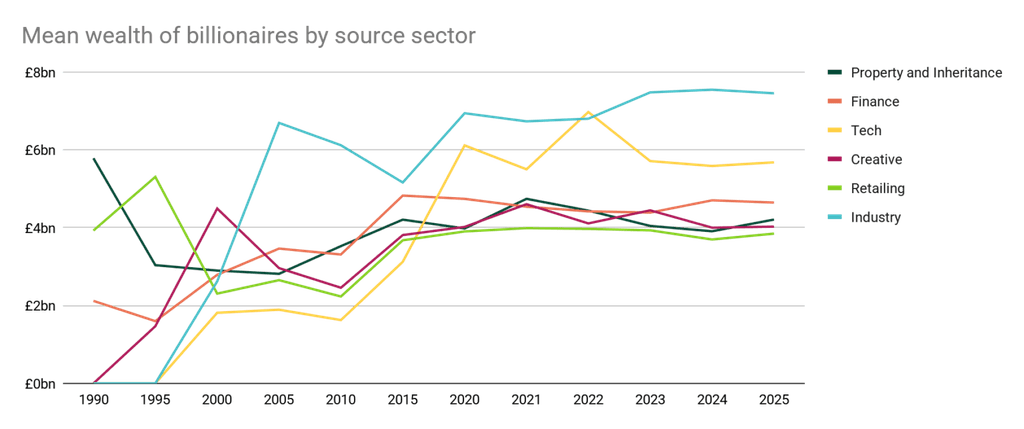
Data from a report by Kings College London, UC Berkeley and the Paris School of Economics published in July showed the wealth of the richest 300 UK households has risen from 5 per cent of GDP to 16 per cent since 1989.
The report indicates a proposed tax would deduct already-paid taxes and not apply to households already paying 2 per cent of their wealth in other liabilities. It is estimated a wealth tax would be applicable to around 1, 000 households could raise £18bn by 2036.
Polling by Oxfam found that 76 per cent of Brits favoured increasing taxes on people with wealth over £10m.
However Rapp believes a wealth tax is no silver bullet, as it is still a minor source of revenue compared to income tax or VAT.
He said: “In the UK, the wealth tax would have to have a decent effect on the budget deficit to be introduced…but my understanding of revenue projections is that it may not be the best tool to raise the most revenue.”
Image credit: Pexels