









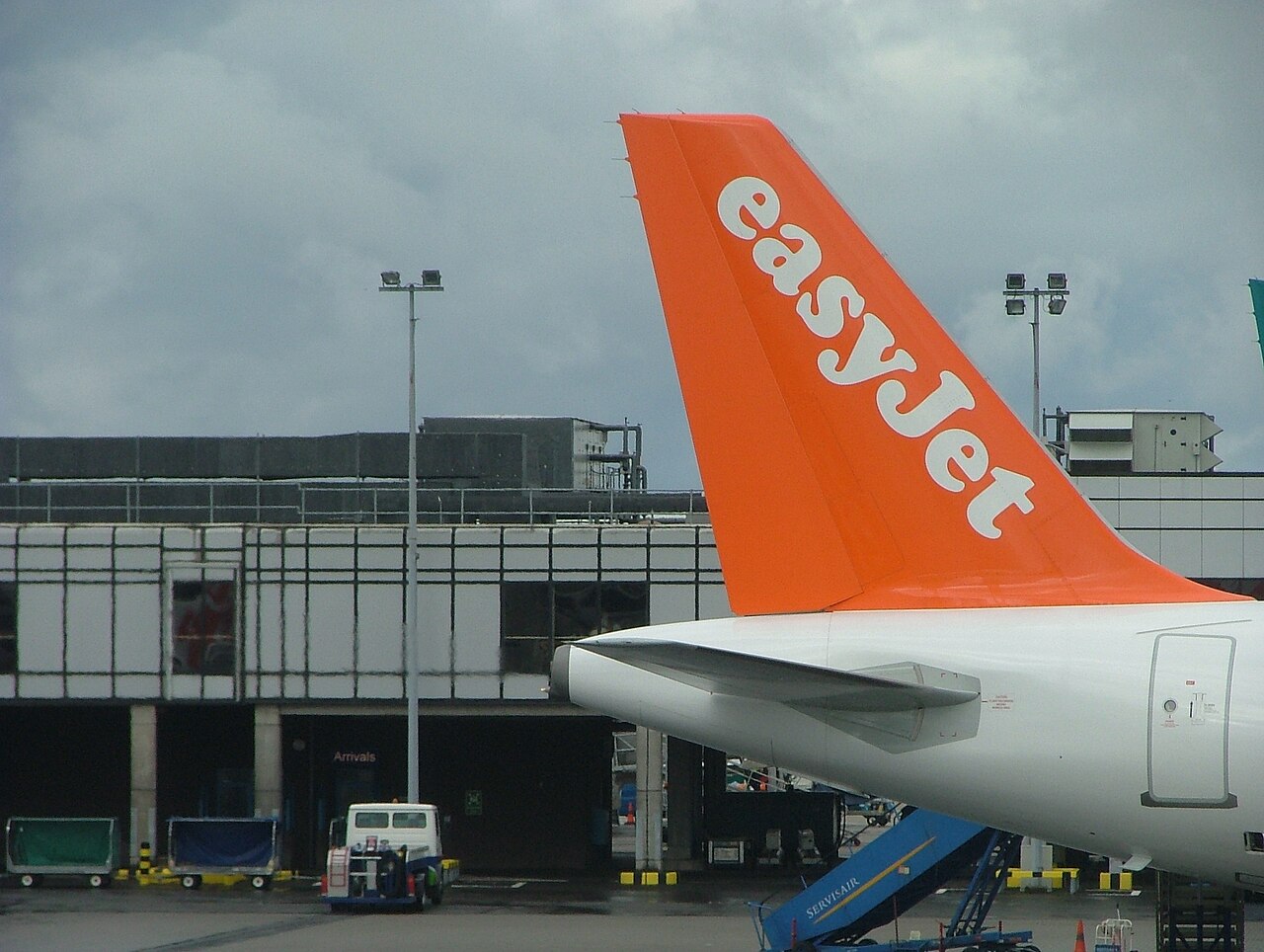
Apollo’s private equity takeover of EasyJet lands within the same week Dangote Cement scrapped its London listing
EasyJet’s decision to go private this week after nearly thirty years on the London Stock Exchange (LSE) has received mixed reactions.
On Wednesday, the British airline’s shareholders voted overwhelmingly in favour of a £5.7 billion takeover offer by US private equity firm Apollo Global Management.
The takeover is a boon for shareholders, with Apollo valuing the airline at 715p a share, a 3-4 percent mark-up on the company’s current share price and higher than a rival offer from US investment firm Castlelake.
One shareholder, who did not wish to be named, welcomed the decision describing it as an “open goal”.
“The [EasyJet] board is to be congratulated for keeping the Apollo offer under wraps to come in and steal it at the last minute from the grasp of Castlelake,” they added.
In recent years, multiple blue-chip companies have been approached by private equity buyers including Intertek, Tate & Lyle and Schroders.
The discounted price-to-earnings ratios of FTSE companies prove highly attractive for private equity, prompting fears of asset stripping and layoffs at British companies.
But some have criticised the airline’s decision to leave the UK stock market after a quarter of a century.
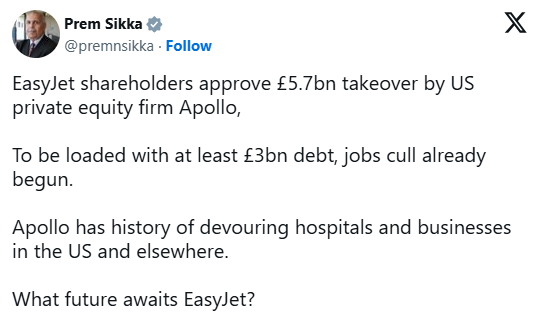
“Apollo has a history of devouring hospitals and businesses in the US and elsewhere,” warned British lawmaker Lord Prem Sikka on X.
The private equity firm has said that it will not cut any jobs within the first 12 months of the takeover but EasyJet is understood to be consulting on proposals that could see dozens of head office roles cut.
Speaking at an industry event in London on Thursday, EasyJet CEO Kenton Jarvis called the takeover a “very good thing” for passengers and that Apollo would support the carrier’s overall strategy.
The airline’s departure comes at a time when the number of companies listed on the LSE has fallen to a decade low, with Dangote Cement scrapping its proposed secondary listing in London this week “in light of current market conditions”.
This is despite LSE’s decision in 2024 to ease rules and regulations for listing, giving companies more flexibility and autonomy.
In June, LSE warned that up to 200 companies could move from the UK to the US as former blue chips Astra Zeneca and Wise adopted dual listings earlier this year.
Apollo’s takeover of EasyJet is scheduled for completion by next March, pending regulatory approval.
LSEG, EasyJet and Apollo did not respond to request to comment.