Follow our live coverage with Greg Hall, Megha Meraniand Narayan Saimbi for the key announcements, political reaction and analysis
4:00PM:This concludes our live coverage of the Autumn Budget. Thank you for joining us.
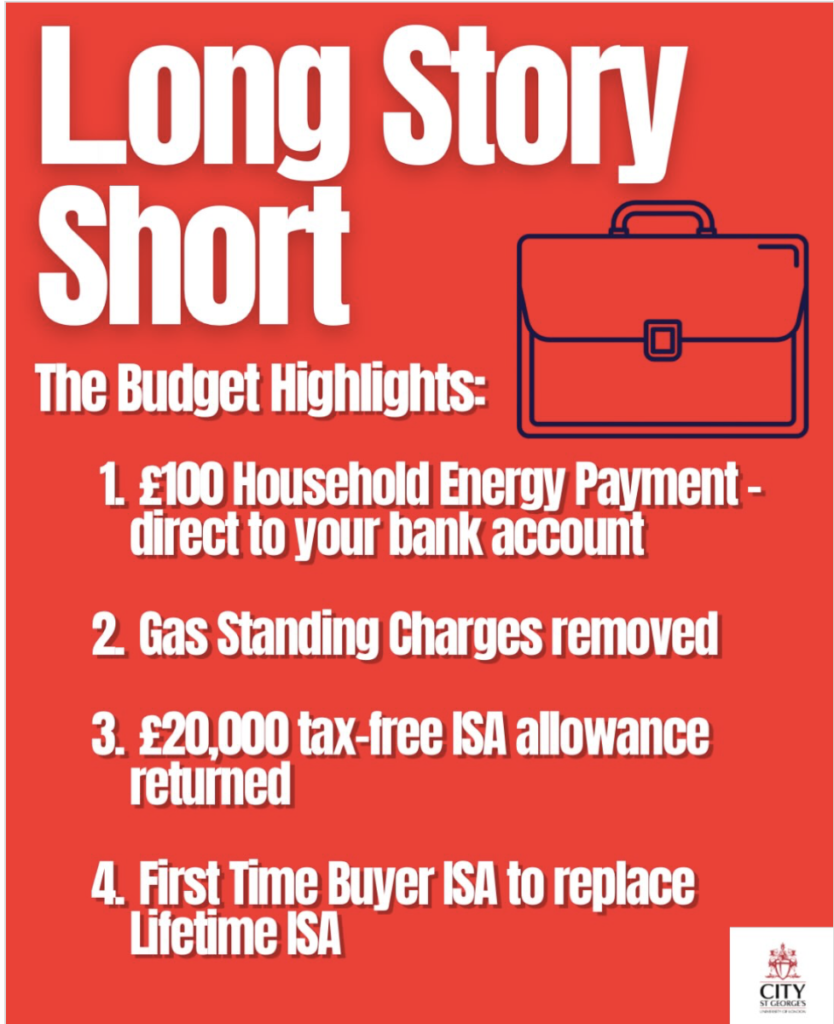
3:55PM: Long story short…
Chancellor John Healey announced cuts to business rates, increases on taxes on banks, and announced further steps the government were taking to achieve renewable energy and further devolution
He also provided monetary relief to households concerning energy and fuel bills in the winter
He also expanded the powers of HMRC, and promised to cut regulation to make way for innovation
3:45PM: “We are on a fiscal knife-edge. Britain is Broke. Britain needs Reform.” – Reform UK leader Nigel Farage
3:30PM: Badenoch tears apart Healey’s Budget
“By next year, Britain will have the highest tax burden in decades.” – Kemi Badenoch
The Conservative leader said the announced measures merely gave the government “a bit of breathing space for next year”, attacking Labour’s economic record, characterising the Budget as “more borrowing, more tax rises and more money on benefits”.
“There are huge problems coming down the road,” she said. “This Budget is for getting by, not for getting on.”
Badenoch said Labour are creating “a lost generation- isolated and powerless over their futures”.
“Most people in the country listening to his budget will be thinking “is that it?”
3:15PM: The City embraced a less dramatic run-up to today’s Budget announcement, as the Chancellor turning to his military background to keep details locked down until the midday reveal.
“Fewer leaks is a good thing…it means fewer people acting on a headline that turns out to be wrong,” said Neil Bage, chief behaviour officer at Fundment, the investment platform, and author of Wired for the Rumour, a guide for financial advisors navigating pre-Budget client anxiety.
“Ahead of the last big Budget, people took money out of their pensions early to dodge changes that never came, and some of those changes can’t be undone,” he said. Read more here.
Follow us for more at on Instagram at CityLondonNews
3:00PM: Treasury Committee Chair Meg Hillier “saddened” there was not reform to student loans.
Healey did not mention any reforms to student loans within his Budget, despite outcry from the public earlier this year, concerning their interest rates.
Money Saving Expert founder Martin Lewis, said that “fiscal drag (and double fiscal drag for Plan 2 students) stays”, as a result of the Budget. He had met with Healey ahead of the budget.
The National Union for Students (NUS) asked where the considerations for student loans were in the Chancellor’s Budget, and calculated that “graduates on Plan 5 [student loans] will be repaying their student loans while earning minimum wage”
2:40PM: The Chancellor announced plans to reform the state pension triple lock from April 2030, which the government estimates will save £15 billion annually by the late 2030s and £50 billion a year by the late 2040s.
Under the current system, pensions rise each year by the highest of inflation, average earnings growth or 2.5%. The revised system would prevent state pensions from rising progressively faster than average earnings over time.
2:30PM: Badenoch, the Conservative Party Leader, called for the Chancellor to resign, calling Healey “the man who has failed to set a plan for 3% [defence spending].”
Healey had previously resigned his role as Defence Secretary under the previous Labour government, due to the government’s inability to meet the defence spending target. Despite this, he has not managed to meet this target within his own Budget.
2:10PM: The Chancellor announced that £10bn of economic military support will be sent to Ukraine.
He stated he will set out the NATO and UK target defence spending next week, and that he will commit to a treaty negotiation with Finland, Poland and Netherlands to boost joint procurement.
1:55PM: £1.5bn to the Social and Affordable Homes Programme
The Chancellor pledged he will be “drawing the line on constant changes to building regulation”.
He will also be “extending cheaper building to councils”, and has pledged to provide £1.5bn to the Social and Affordable Homes Programme.
1:50PM: Meanwhile, as the Chancellor sets out his tax and spending plans, new figures show that HMRC’s marketing expenditure has tripled to £15 million. Read about it here.
1:44PM: “100% of all business rates will be devolved by the end of the decade.”
The Chancellor announced plans to invest more money into Wales, Scotland and Northern Ireland. Within these, he announced the new Good Growth Fund for mayors, supporting growth and community development. He also announced that 20% of business rate revenues will go to mayors, with a share of income tax also going to mayors, as well as granting them new powers to impose “visitor fares” from 2028.
The Chancellor said that “100% of all business rates will be devolved by the end of the decade.”
Independent cafes across the City of London are feeling a double pinch as soaring rents and utility bills collide with declining footfall. Does Budget offer enough help to small business? Read more of our coverage here.
1:40PM: New covenant for data centres
Healey launched a new British Data Centre Covenant, promising that strategically important data centres would get the “grid connections they need” in return for investment in the areas and communities where they operate.
The move could address delays in securing electricity grid connections, a major obstacle to data centre development as demand for computing power surges with the growth of artificial intelligence.
The initiative aims to accelerate AI infrastructure development while ensuring local communities benefit from jobs and investment.
Healey also announced an additional £140 million for the government’s Sovereign AI programme to help British AI companies expand and develop new technologies.
The investment builds on an existing £500 million fund aimed at helping homegrown AI businesses grow and remain in the UK, rather than relocating overseas.
AI Minister Kanishka Narayan said last month that the programme would put the “heft of a nation behind Britain’s AI founders”, giving smaller companies greater access to government contracts and opportunities to expand.
1:37PM: Promise to cut red tape and use government contracts to back British businesses
The Chancellor pledged to reduce regulatory barriers to investment, announcing plans to legislate for exemptions designed to encourage innovation and cut administrative and reporting requirements for businesses.
“We will prevent regulation from holding back investment.” – John Healey
He said the government was “determined that we use public procurement to back British businesses, buy British goods”.
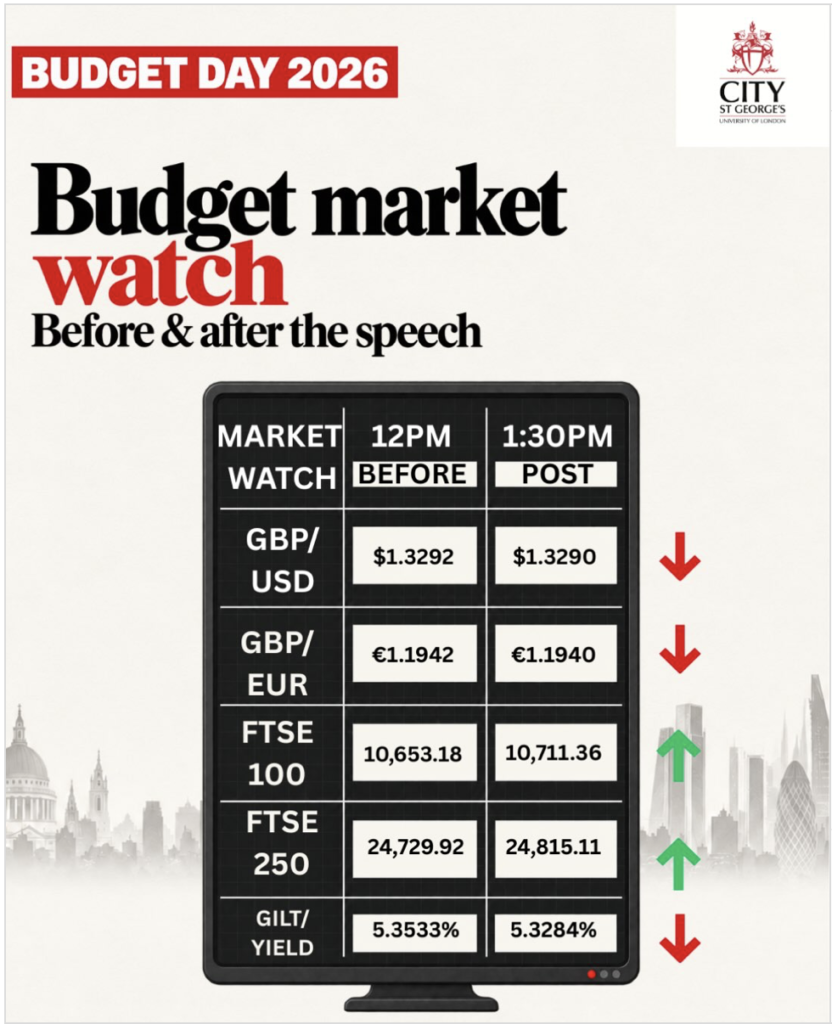
1:32PM: Bank shares rise as UK government bond yields fall
Shares in Lloyds Banking Group, Barclays and NatWest rose around 2%. Investors reacted positively owing to a smaller and shorter-lived increase in the banking surcharge than was anticipated pre-budget.
The yield on the UK’s benchmark 10-year government bond held steady falling slightly by four basis points to 5.31%, returning to their pre-budget levels, indicating an easing in government borrowing costs as investors assessed the Budget’s impact on public finances.
1:27PM: Banks foot the bill
The Chancellor raised bank taxes and announces £20.4bn investment boost
Healey announced a temporary increase in the bank corporation tax surcharge from 3% to 6%, saying he was asking banks to do “bit more of our banks to help ordinary people” and to give “breathing space to British values”.
The 3% increase, which comes on top of the standard 25% corporation tax rate, will take effect in January 2027 and last for 15 months.
Healey also announced an additional £20.4 billion for the National Wealth Fund and British Business Bank to boost investment in UK businesses, infrastructure and emerging industries.
1:24PM: Chancellor scraps planned cash ISA cuts and announces new savings products
Healey announced that the annual cash ISA allowance will remain at £20,000, reversing plans by his predecessor, Rachel Reeves, to cut the limit to £12,000 for savers under 65 from April 2027.
Individual Savings Accounts (ISAs) allow people to earn interest or investment returns free of tax.
Healey also announced plans for a new Starter ISA and that a First-Time Buyer ISA would replace the existing Lifetime ISA, with the aim of helping more people save for their first home.
1:20PM: The Government’s Council Tax Band checker crashes as people check to see if they are eligible for promised £100 cash payment for energy bills.
1:15PM: Expansion of HMRC Powers
Healey said he is giving HM Revenue & Customs (HMRC) stronger powers to pursue people who can afford to pay their taxes but fail to do so.
He also announced changes to ensure money withdrawn from companies is taxed consistently, alongside reforms intended to bring the UK’s tax system into line with other countries.
Businesses will receive “greater upfront tax relief for new investment”, while the winding-down allowance will be reduced from 14% to 12%, he added. The writing-down allowance is currently 14%, having fallen from 18% in April 2026.
He is also increasing income and property and savings tax by a further two percentage points from April 2027.
1:11PM: OBR predicts slowdown in growth ahead of Budget more than economists’ expectations. The OBR expects expansion of 1.2% this year and 1% next.
12:50PM: Budget key pledges
Gambling taxes to rise as gaming and vape shops lose business rates relief
Healey levied an increase in Machine Games Duty from 20% to 25%, raising taxes on certain gambling machines.
Gaming and vape shops would be excluded from the expanded business rates relief scheme, he said.
Business rates relief for shops, pubs and restaurants
Healey announced plans to raise the threshold for business rates relief from £12,000 to £18,000 in rateable value for eligible retail, hospitality and leisure businesses.
The change would exempt qualifying businesses from paying business rates altogether, offering relief to smaller shops, restaurants and pubs facing rising operating costs.
He also announced £10mn alcohol duty relief for small breweries and small businesses.
Employment wage
Healey announced a 3.9% increase in the National Minimum Wage and National Living Wage, as part of measures aimed at boosting workers’ incomes.
He also said new requirements for employers to disclose pay in job advertisements would be introduced soon, in a move aimed at improving pay transparency.
He also announced plans to expand eligibility for paternity leave, giving more fathers access to time off following the birth of a child.
Many business owners warned that increasing labour costs could lead to hiring freezes, further dampening demand on an already sluggish labour market. Tina McKenzie, policy chair of the Federation of Small Businesses, said in a press release: “With National Insurance contributions rising, employment costs climbing and hiring becoming riskier, small employers are thinking twice about taking people on”. Read more here.
Relief for Households
The Chancellor announced £100 energy payment for 20 million households in Council Tax Bands A-D, to “take pressure off people in the coldest months”.
He wants to “give people breathing space on energy bills this winter”.
He confirmed the removal of gas standing charges from household bills and set out similar reforms for electricity bills.
He confirmed a 5p-per-litre fuel duty cut has been extended to July 2027, delaying a planned increase in petrol and diesel taxes.
For the longer term, the government plans “radical reform of the energy market to achieve cheaper power”.
12:45PM: Labour’s focus is “cheaper energy, with clean power to [do] this.”
This government will “only buy a build new projects when they lower bills, and when they can connect to the grid”
He adds that Jackdaw was a “pragmatic common sense decision” while the government has also launched a new Energy Wealth Fund.
12:33PM: Chancellor John Healey arrives at the Despatch Box to deliver his first Budget
He promises a Budget for “working people” and “fiscal discipline” measures to ease the cost of living and “growth in every postcode”.
Healey began his address paying tribute to his predecessor, Rachel Reeves, who became Britain’s first female chancellor in 2024, while taking aim at former prime minister Liz Truss.
The former prime minister “blew a big black hole in the Budget,” he said.
He acknowledged rising inflation amid the ongoing conflict in the Middle East and that the UK faces the highest borrowing costs in the G7.
“[The war] in the Middle East has directly affected the Budget.” – John Healey
According to the OBR, national debt will be 83.8 per cent of GDP in 2027/8.
It has “driven up costs on British businesses”, pushing up inflation and squeezing household finance, he said.
But the Chancellor promises families and businesses “breathing space”.
Gas prices have “nearly tripled” since February, he said, leaving families facing higher mortgage payments and prices at the petrol pump.
The impact is also being felt in the public finances, with government borrowing costs across the G7 reaching levels not seen in decades.
Healey said the Office for Budget Responsibility (OBR) forecasts an additional £14 billion in government debt interest payments this year, adding to pressure on the Treasury’s finances.
12:31PM: PMQs concludes as Burnham faces questions on UK-EU relations, energy and devolution
Ahead of the Budget the prime minister Andy Burnham was challenged by the Leaders of the Opposition and MPs at PMQs on various topics including the UK-EU Summit next month, further devolution, further North Sea oil exploration and nuclear energy.
12.15PM: Liberal Democrat leader Ed Davey challenges prime minister on announced changes to carer’s allowance. The government has said it would end rules that strip unpaid carers of their entire benefit if they earn even slightly above the £204 weekly limit, but the changes will not take effect until 2030–31 raising concerns about how quickly carers will benefit.
12.14PM: Badenoch says the prime minister needs to “get borrowing down, welfare down, and people’s taxes down”.
12.13PM: Badenoch challenges Burnham on whether the government would hold a referendum on EU single market membership.
12.10PM: The Prime Minister and opposition leader Kemi Badenoch spar on next month’s UK-EU Summit, ahead of the Chancellor’s Budget. Burnham pledges to secure a “better deal for Britain” as he pushes to strengthen trade and security ties with the bloc.
12:09PM: Prime Minister Andy Burnham said at PMQs that a new Water Bill would pave the way to bring water under public ownership.
Chancellor set to deliver Budget after PMQs – follow live
Chancellor John Healey is set to unveil the government’s Budget at around 12:30 GMT, outlining the government’s tax and spending plans amid mounting pressure on public finances and household budgets.
First, Prime Minister Andy Burnham will face Conservative leader Kemi Badenoch at Prime Minister’s Questions, starting at 12:00 GMT.
Follow us at on Instagram at CityLondonNews
12:00PM: Hello and welcome to our live coverage of today’s Budget with Greg Hall, Megha Merani and Narayan Saimbi.
Meanwhile, our reporters will be out across London, bringing you the latest announcements, analysis and reactions as they happen.