








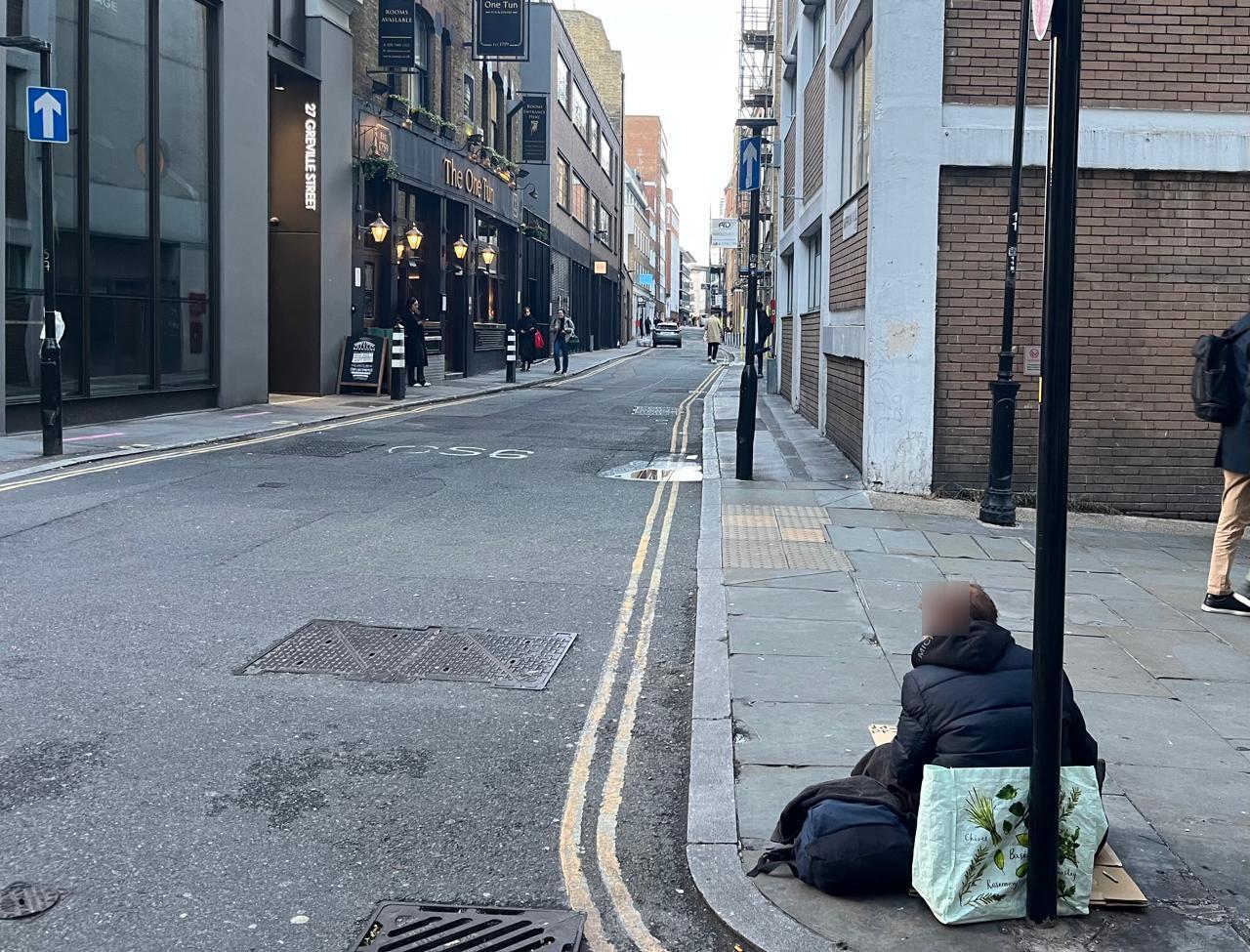
Frontline workers keeping rough sleepers off London’s streets have questioned whether a new cash boost will make a long-term difference on the ground. Workers cited low staff retention and rising long-term rough sleepers, and called for more permanent staff contracts.
On Sunday, Andy Burnham, pledged £432m to provide “continuity for frontline services”, the details of which will be outlined in the Budget later today. Tackling homelessness is a key political promise Burnham made upon taking office in July, echoing a pledge he also made when running for Manchester mayor.
The prime minister’s goal is to give every rough sleeper a route off the streets by this Christmas. The new funding, along with £442m announced in August, brings the government’s total investment to about £900m.
London, home to nearly 4,000 rough sleepers, received £168m from the August tranche. It is unclear if the capital will receive a similar 38% of the new funding at a time when most council-run centres have scaled back walk-in services.
A source at Salvation Army’s Cambria House, who did not wish to be named, said they are “constantly recruiting,” because “staff retention is so low.” Managed by the Camden Council, Cambria House has 48 rooms and is run by 17 staff.
“The new funding needs to go towards specialist support and more permanent contracts for staff. Here, the majority work on a short-term basis,” the source said. They added, London should get a bigger percentage of the new funding since many rough sleepers come down from places like Liverpool, Newcastle, Manchester and parts of Ireland and Scotland.
Government figures show frontline workers are “poorly paid” with an average annual salary of £29,217. The median annual salary for full-time workers based in London is £49,826.
Rising number of long-term rough sleepers
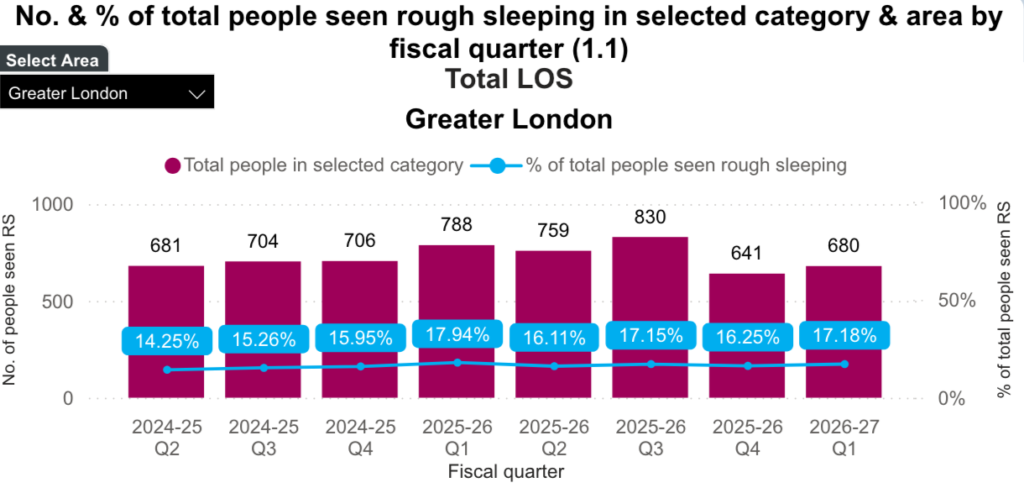
Out of 3,959 rough sleepers in Greater London, the number of people living long term on the streets continues to rise.
In late 2025, the number of people classified as “living on the streets” (LOS) reached a record-high of 830, according to the multi-agency database Combined Homelessness and Information Network (CHAIN). The government will release figures for this year’s second and third quarter on Friday.
“We often see men and women who are experiencing homelessness offered accommodation but then choose to leave because they are housed away from friends and community,” said Jennifer Garibay, frontline worker at a Christian day centre on Webber Street.
A source at City Lodge, St Mungos, in Barbican, referred to the £432m cash injection as “peanuts”. “On average, it takes £10,000 to house and care for one rough sleeper. Even if London gets half of the funding, it won’t be enough to sustain centres like this for six months.”
City Lodge is run by over 10 staff members, a handful of whom work on permanent contracts. They primarily take in older rough sleepers, who have a history of homelessness. “All 17 rooms are occupied. Since most of them are older, they require caretakers and other types of services. Hopefully the extra funding goes towards care packages in supported housing like ours,” the source added.
El Hunt, senior press officer at homelessness charity St Mungos explained, the government’s next step should be ensuring Local Housing Allowance (LHA) rates match local rents.
System-wide housing shortages were also frequently cited by frontline workers as a cause of rising homelessness, according to a report released by St Martin-in-the-Fields Charity last week.
The National Housing Federation has been tasked with providing 2,000 additional homes to help Burnham’s drive to end homelessness. The idea is to move people off the streets into these homes or provide “move-on accommodation” for those already in supported housing in order to free up space in the wider system.
These will be bedspaces across England which are a mix of empty and void properties, homes earmarked for disposal, vacant units in supported housing and decommissioned supported housing schemes, the federation said in an email. There are no details of locations in London yet.