



A growing industry of Oxbridge-trained coaches is helping wealthy Chinese families navigate British university admissions — and charging huge sums for their services
Peter Cui was working in finance in 2017 when he started coaching students back in his home country of China to get into Oxford and Cambridge on the side. The pay in elite consulting was good – even better than his returns on the trading floor. By 2022, Mr. Cui shuttered his finance career to scale his tutoring business full-time.
He hasn’t looked back. His company, Blue Education, now works with around 500 students at a time on their applications to elite British universities, the vast majority from mainland China and Southeast Asia. While standard packages start in the four-figure range, premier “all-in” consulting fees can climb into the six figures. For Chinese parents, Mr. Cui says an acceptance letter from an elite British university can feel like a “validation of their approach to parenting.”
Blue Education’s tutors are predominantly Oxbridge graduates, deployed across a range of services: admissions test preparation, interview coaching, subject-specific critical thinking — and personal statements. Cui isn’t the only one who’s picked up on the demand. Western university admissions tutoring across Asia is a largely unregulated business, and the market has been estimated by consultancies at between $10 and $20 billion.
The tutors are current Oxbridge students or graduates – sometimes as young as 20 years old – earning up to £80 an hour, a minor fraction of what the students are paying Blue Education for the tutors’ services.
Alex*, an Oxford graduate who started tutoring at Blue Education aged 20, as a second-year undergraduate, for £80 an hour, said he’s helped rewrite a Chinese student’s philosophy EPQs and provided over dozens of hours of preparation for the Thinking Skills Assessment, Oxford’s entry exam for Philosophy, Politics and Economics.
He edited a Chinese student from Shanghai with English grammar in his Extended Project Qualification (EPQ) on ethics of the laws requiring the wearing of seat belts, which received an A* – the highest mark possible.
Alex said he was drawn to the position due to the “ridiculously good” salary for someone his age.
Mr. Cui credits the rise in demand to an underserviced Chinese market for elite education. China has roughly 1.3 billion people and two universities — Peking and Tsinghua — that rank as highly as Oxford or Cambridge. The gaokao competition to enter either university is ferocious, with odds even worse than Oxbridge or the Ivy league. For families with the financial means to consider an alternative, Britain has emerged as the answer.
“The sheer competition is immense,” said Cui. “As long as they have good English, a student that would be on the cusp of Peking University in terms of ability would be a very competitive candidate for Oxford or Cambridge.”
Cui estimated that 80 to 90 percent of mainland Chinese applicants to Oxford or Cambridge will have sought some form of coaching. “It’s almost a prerequisite,” he said.
Students share advice across social media on
The international curriculum also offers an option to parents who want their students to escape the rigidity of the Chinese curriculum and the pressure generated by the competition within it. Some parents opt for a western education, choosing between schools offering A-Levels, the International Baccalaureate, or US-style Advanced Placement.
“Parents find it’s better for their health to study under international programmes,” Cui said. “To some degree it’s more progressive parents, relatively speaking, who tend to opt for that.”
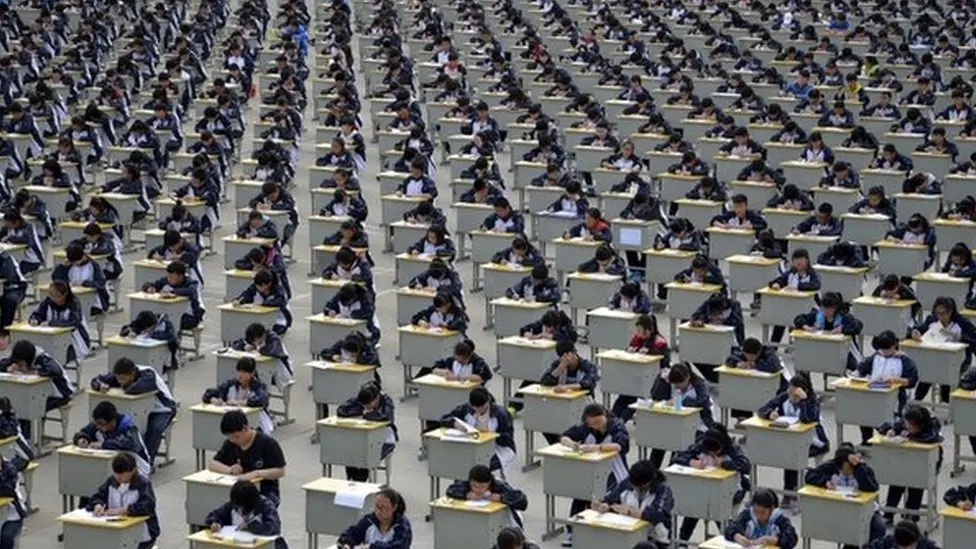
Chinese students sit the notorious Guaoko exam. Reuters.
For a smaller, wealthier subset of clients, it is not predominantly career prospects offered by an elite education, but rather social status that make the high fees worth paying. In particular, for families building multi-generational businesses, an Oxbridge degree is part of the credentials that smooths a child’s eventual ascent to the top of a family business.
The interview is the bigger business driver. Chinese students have been trained to excel in written examinations which favour memorisation and structure. The Oxbridge tutorial interview instead asks students to demonstrate Socratic and discursive skills, to grade how a student thinks rather than what they know.
The global private tutoring market was valued at nearly $97 billion in 2023. Asia-Pacific accounts for more than 60 percent of it. The elite, Oxbridge-focused sliver of that figure is smaller — but extraordinarily lucrative per transaction.
Around 6,000 students from mainland China apply to Oxford and Cambridge each year; a further 10,000 to 15,000 target LSE, Imperial and comparable institutions. The tutoring industry that has grown up around them has flourished in the absence of any meaningful regulation.
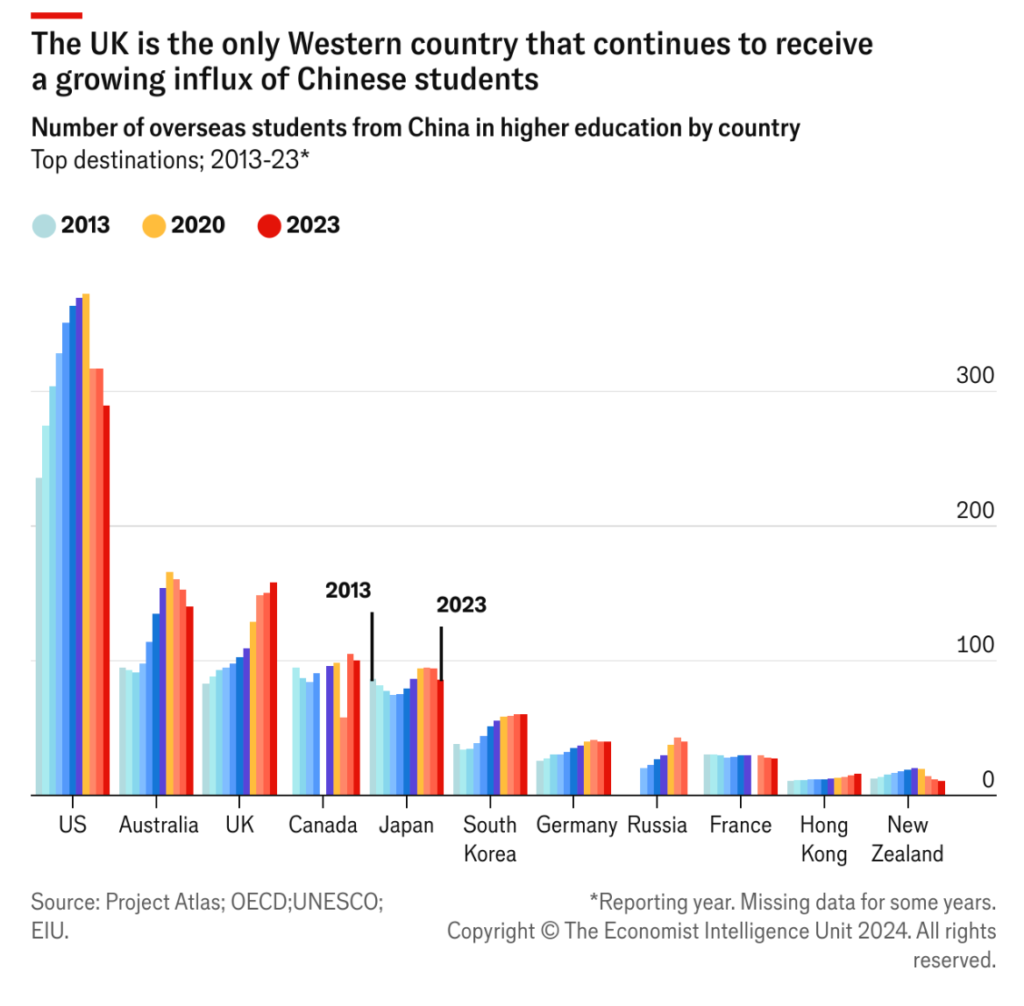
The UK has also benefited from a broader shift in where Chinese families want to send their children. Post-pandemic, Britain has taken significant market share from the United States. Meanwhile, enrolment from Vietnam, Singapore and other fast-growing Southeast Asian economies is rising as international-curriculum schools proliferate across the region.
Cui distinguishes his firm from a second, larger tier of agencies that function primarily as recruiters — channeling international students toward universities that depend on overseas fees, with little educational value added. Blue Education, he says, is squarely in the tutoring and consulting camp.
“The area we work in is consulting and advice,” he said.
Oxford and Cambridge are not unaware of the industry that has grown up around their admissions processes. Both institutions have spent years trying to design tests and interviews that reward genuine intellectual ability and resist coaching. The results, Cui suggests, have been mixed.
“The requirements and processes have gotten more complex over the last five years,” he said. “Unis have tried to be more rigorous, and interviews have gotten harder. That prompts students to seek help.”
“They say they’re trying to make it tutor-proof,” Cui said. “But even for some very able students, even practising a few interviews, which is offered at any competitive British private school, makes a difference.”
*Original names have been changed.