




By Carla Rosch
Caz Dennett was taken to court over £650 last year. A Weymouth County Court judge ruled that she had to pay the sewage bills she owed Wessex Water.
For years, the 53-year-old campaigner and social scientist had been actively organising and participating in local protests in the south coast of Dorset, frustrated with what seemed like constant and unjustified wastewater discharging by Wessex Water directly into the area’s water sources. By 2023, she had decided to stop paying the sewage charge part of her water bill.
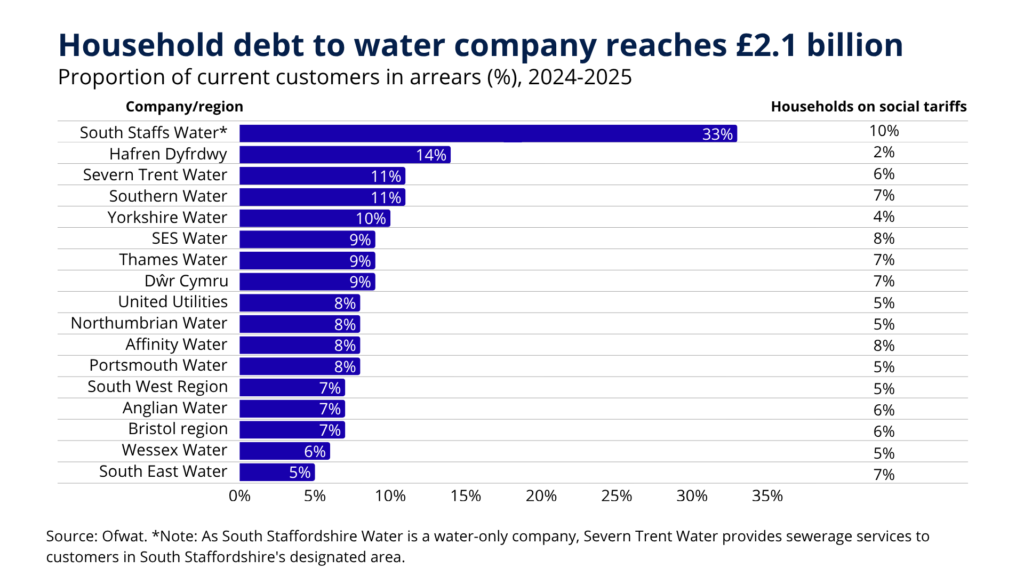
Customers owe water companies more than £2bn, according to the latest Ofwat figures. Across England and Wales, 2.8 million households are in debt, nearly 200,000 more than the previous year. While much of this is due to affordability issues, a growing proportion is because people like Dennett refuse to pay for long periods of time.
“It’s not realistically about starving them of funds, it’s about making a point,” Dennett says.
She wanted more people to join and stop paying their sewage bills, so she started the Don’t Pay For Dirty Water campaign via Extinction Rebellion’s XRUK Dirty Water team. From their perspective, the more people boycott, the more effort water companies require to get through each of those cases, the more it clogs up the court system, and the more time they can deprive the companies of revenue.
They ran calculations to estimate the financial impact depending on how many people stopped paying.
“Rallies and protests are great for raising awareness, but it doesn’t impact the water company directly. This was to bring pressure in a different way,” says Dennett.
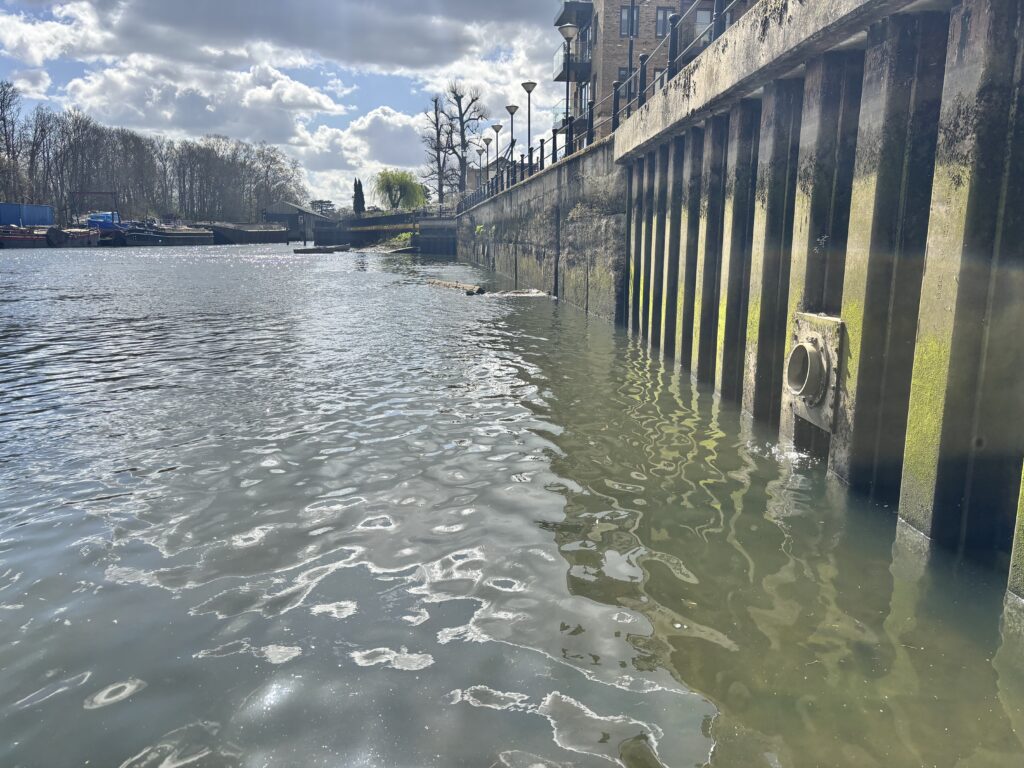
On the surface, the most urgent reason to boycott is to pressure water companies to improve their performance and to stop them routinely discharging untreated wastewater into the environment.
Other campaigns similarly promote a financial boycott, including Boycott Water Bills and Take Back Water, who suggest that more than 13,619 people have signed a pledge refusing to pay.
Although there is no precise way of tracking numbers, Dennett believes participation has grown “massively” and is in the thousands.
Thames Water, which serves 16 million customers across London and the Thames Valley, recently reported £32m in “expected credit losses on trade receivables and contract assets”, money it is owed by customers. This represents a 30 per cent increase from the previous year, when it had £25m in “impairment losses on trade receivables and contract assets”, the value it did not receive from bills.
And it is not alone. Nearly one in ten households were in arrears with water bill payments in 2024/25.
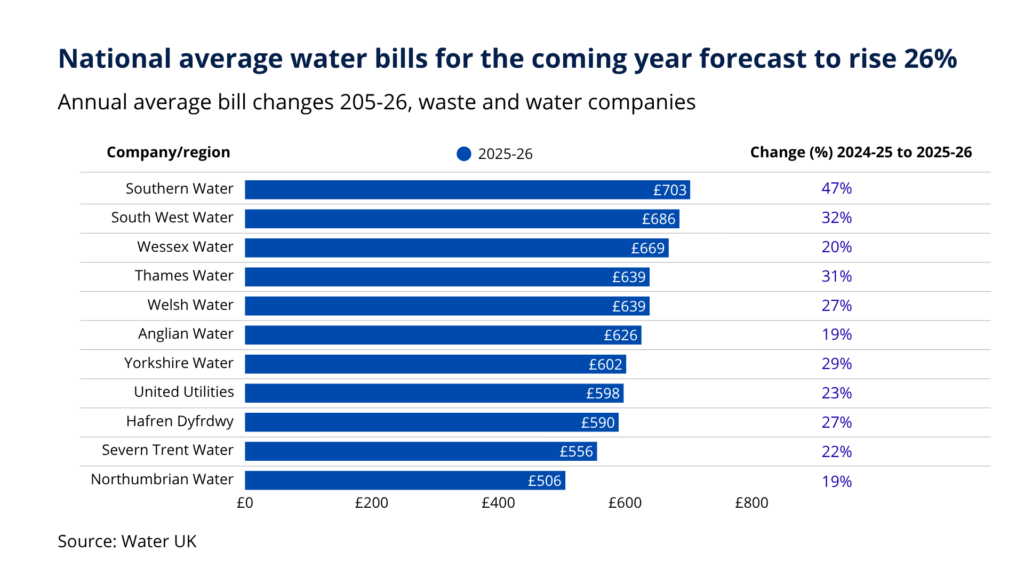
National water bills for the coming year are expected to rise on average 26%. According to the trade association Water UK, “bills have in fact decreased in real terms nearly every year since 2010”, once they are adjusted for inflation. However, for many families facing a cost of living crisis and stagnant wages, this represents a significant burden. Citizens Advice reported 44,000 people sought help with water supply and sewerage debt last year.
In 2024, water companies used enforcement agents or bailiffs in 35,000 cases to collect unpaid debt, the highest level recorded, according to the Consumer Council for Water (CCW).
The CCW also states that bailiffs “should only be used by water companies as a last resort, and where they can show customers are persistently and deliberately not paying for services despite having the means to do so”.

Not paying bills, whether because of economic hardship or for protest, can damage credit scores. Those who voluntarily boycott understand the risks, which is why it is often done from a position of financial security, typically by people who have largely paid off their home and are less concerned about applying for loans or mortgages.
Unlike Dennett, who was taken to court by her water company, Lawrence Richard actively wants to take his water company to court.
The 63-year-old hasn’t paid his water bills in years and started his own campaign, Justice for Water, to pre-emptively sue Southern Water.
“They’ve got enough resources to just ride out the boycott,” Richards says. “I doubt they’re worried, so the only reason for protesting really is for the publicity.”
Rather than arguing against environmental damage, he wants to base his case on consumer law for overcharging the poor quality of the service provided. It remains to be seen what the outcome will be, but he sees this as a way of taking action to stop Southern Water from pumping sewage into the waterways.
“Unless we do something now, it’s going to get worse. That’s my argument for doing it,” he says.
Part of the problem is that water services in England and Wales operate as regional monopolies. If a company hurts the environment by underinvesting in maintenance and infrastructure in order to extract profits, customers have no other alternative.
Anastasia Kavada, an academic, leading the MA in Media, Campaigning and Social Change at the University of Westminster sees boycotts as an effective way to protest, but with inherent limitations.
“It hits companies where it hurts, which is their income and profits,” she says.
However, it is very hard for campaigners to claim any results and determine the scale of the boycott since it plays out through isolated actions.
“It can feel lonely, as it’s just you against the company. If you’re taken to court, you need to deal with it as an individual,” Kavada says. “All of this is fine, but you’re staying within a capitalist framework, where you are asked to participate with your power as a consumer, not as a citizen.”
Kavada believes that boycotting alone does not fundamentally change the structure of companies managing public resources for profit.
Most sewage campaigners are firmly against water privatisation and for companies to be renationalised.
For Dennett, however, this is not enough. Her bigger aim goes beyond ownership. It’s about a wider system change that considers sustainability, climate change and involves civil society. That is why she is calling for a citizens’ assembly that brings people together to discuss the broader issue of water management.
In the meantime, she continues to boycott.