




By Zygimantas Mascinskas
A floating swimming pool, thousands of residents and a growing restaurant scene are changing the Docklands financial district. But turning office footfall into a neighbourhood economy brings new risks for the businesses expected to make it work.
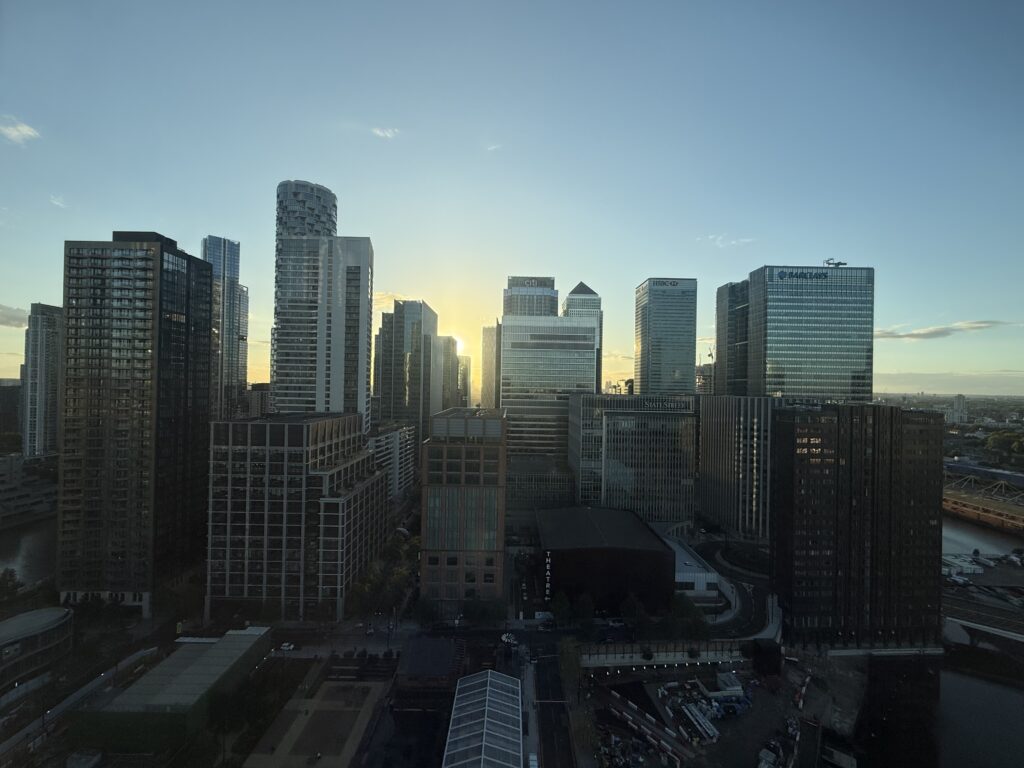
Where Canary Wharf’s docks once served commerce and its towers later came to symbolise London banking, swimmers now cut through the water beneath the skyscrapers.
Sea Lanes Canary Wharf opened at Eden Dock on 19 June, putting a 50-metre, six-lane floating pool, saunas and a waterside clubhouse in the financial district. The pool is open throughout the year, with memberships and pay-per-swim access.
The shift matters because the office model that built the estate has been under pressure since the pandemic. Clifford Chance has committed to a new City office at 2 Aldermanbury Square, while its Canary Wharf lease expires in 2028. Clifford Chance’s office announcement HSBC is moving its global headquarters from 8 Canada Square to Panorama St Paul’s, with many London employees due to relocate in 2027. But the bank has also signed a 15-year lease for 210,000 sq ft at 40 Bank Street, preserving a substantial presence on the estate. HSBC’s 40 Bank Street lease.
The office story is less one-directional than the departure headlines suggest. JPMorganChase intends to build a three million sq ft Europe, Middle East and Africa headquarters at Riverside, subject to approvals and a continuing positive UK business environment, with capacity for up to 12,000 employees. JPMorganChase’s Riverside plans Visa has agreed a 15-year lease for 300,000 sq ft at One Canada Square from 2028. Visa’s Canary Wharf move
That leaves Canary Wharf with a different proposition: not abandoning financial and professional services, but surrounding them with reasons for workers, residents and visitors to stay.
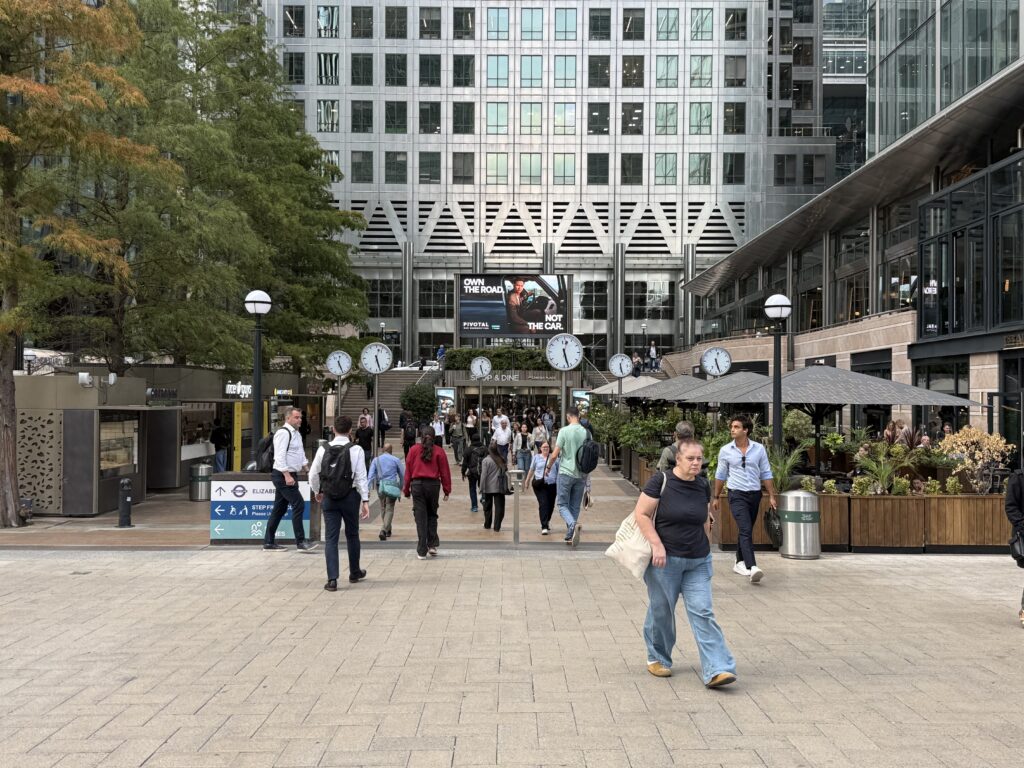
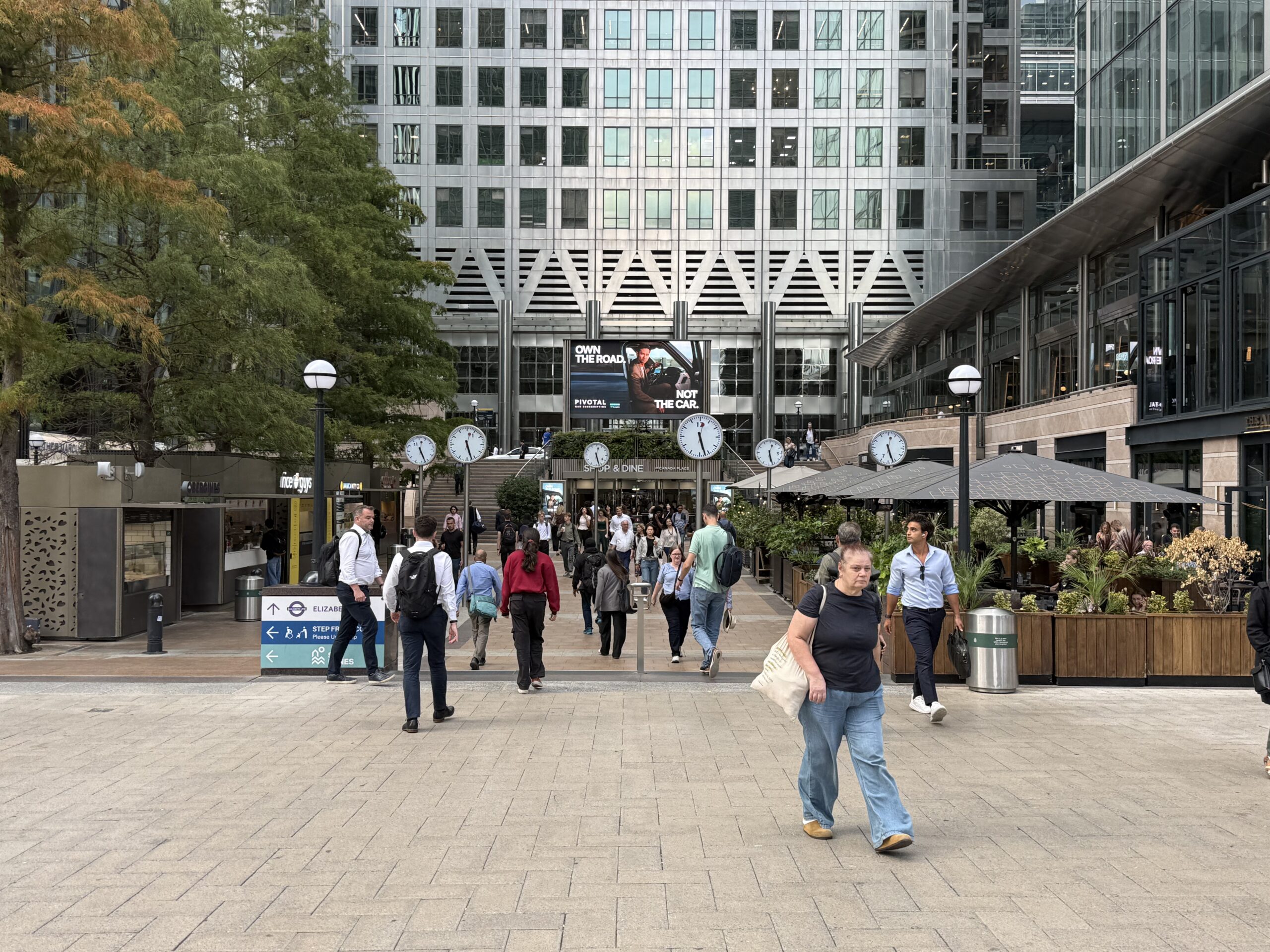
There are signs the strategy is changing the rhythm of the place. Canary Wharf recorded more than 76 million visits in 2025, up 5.4 per cent on the previous year, and footfall in the first 14 weeks of 2026 was 8 per cent higher than a year earlier. Canary Wharf Group says more than 3,500 people now live on the estate, alongside more than 1,400 build-to-rent apartments.
Sharon Opoku, sales and office manager at Foxtons Canary Wharf, says people looking for homes are no longer simply choosing the area because their office is nearby.
“I wouldn’t say it’s just commuters now,” she says, pointing to the expansion of shopping, food and leisure. “Not everyone likes a commute anymore.”
Live listings from Foxtons put the average advertised rental value in Canary Wharf at about £659 a week, although the figure changes with the properties on its books and is not a market-wide index. The agency has an obvious commercial interest in a strong local housing market, but Opoku’s argument is that Canary Wharf is increasingly being chosen as somewhere to live in its own right.
That is recognisable to Benjamin Ashby, who lives in Wood Wharf and chose Canary Wharf for reasons unrelated to work.
“No, it feels like a neighbourhood now,” he says. “They’ve got the nice garden areas, new cafes, new kind of walks around the harbour, more fun things to do.”
He lists Morrisons, Waitrose, 640 East and WatchHouse among the places he uses regularly. Asked how much he spends locally, he estimates “a couple of hundred quid”, although he says he has not kept track. Restaurants are “a bit more expensive”, he says, but there are enough of them.
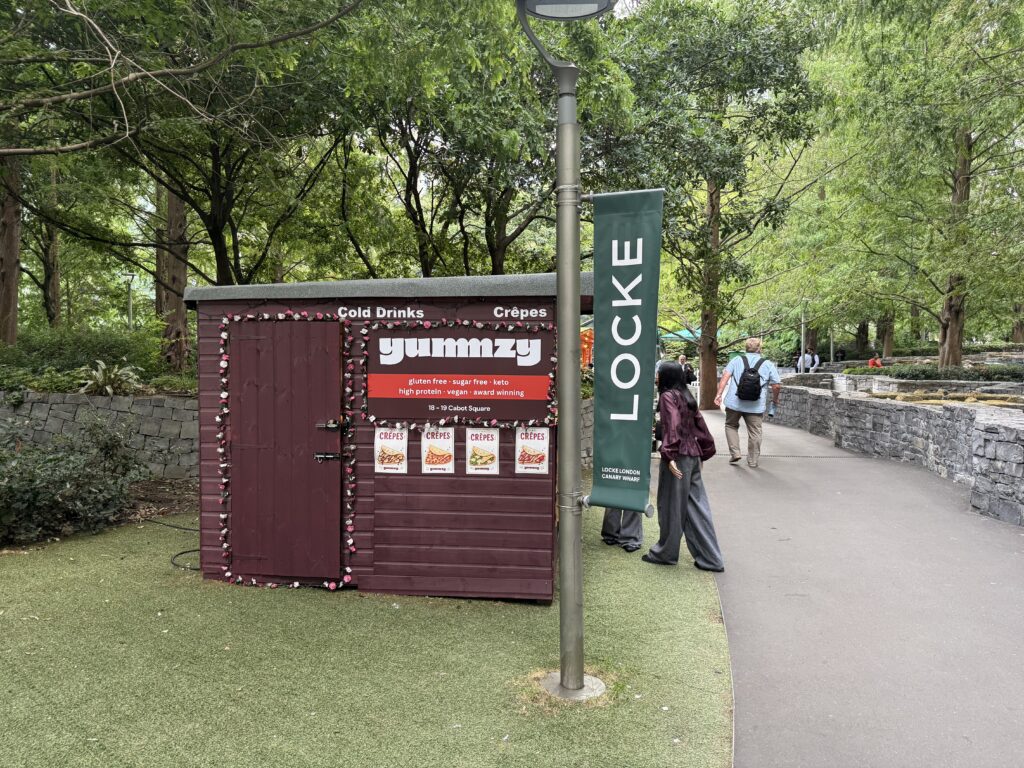
For businesses on the estate, that resident and weekend economy can be valuable. Jolie Gindi, co-founder of independent eatery Yummzy, remembers a different district.
“I remember how soulless it used to be, but now it’s just full of hustle and bustle and different people, different backgrounds as well, tourists, locals, you name it,” she says.
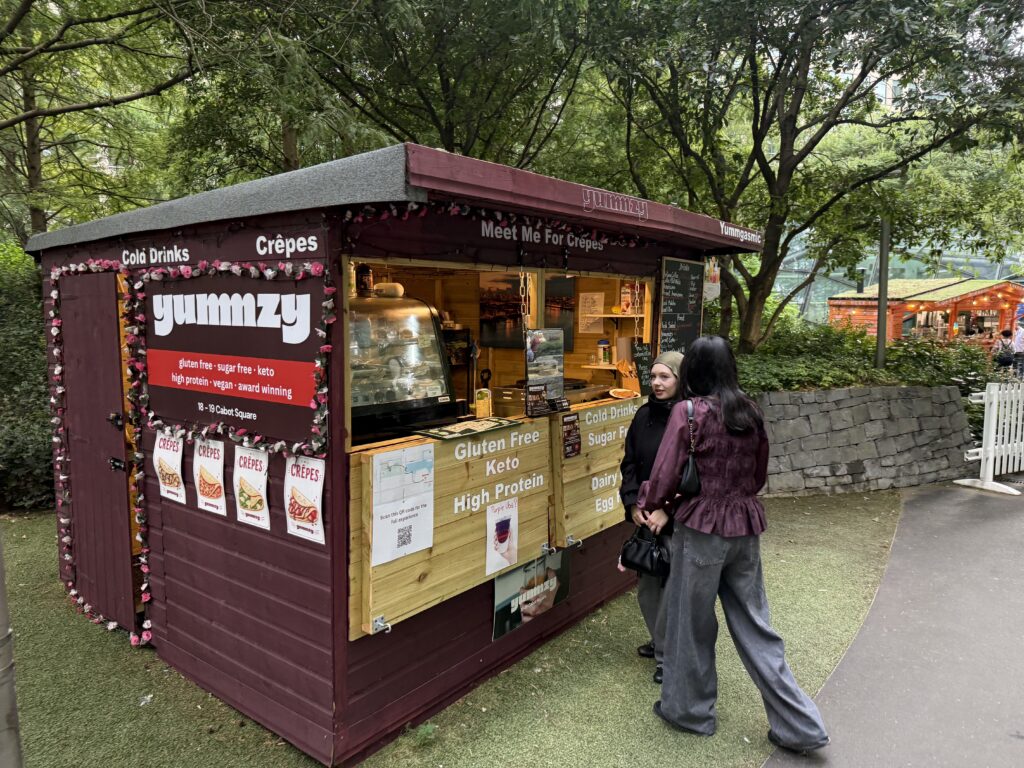
Canary Wharf Group’s 2024 accounts record the number of cafés, bars and restaurants rising from 38 before Covid-19 to more than 80 by the end of that year. The same accounts show 70 retail lettings and renewals and 39 new retail and leisure openings.
Greater choice creates a harder commercial equation. Gindi says weekend customers can spend more than office workers who stop only for coffee, but an ever-growing collection of restaurants and bars divides that spending between more operators.
“We need to look at Canary Wharf as a whole ecosystem,” she says. “You can’t eradicate one species and hope the other ones will survive, and vice versa.”
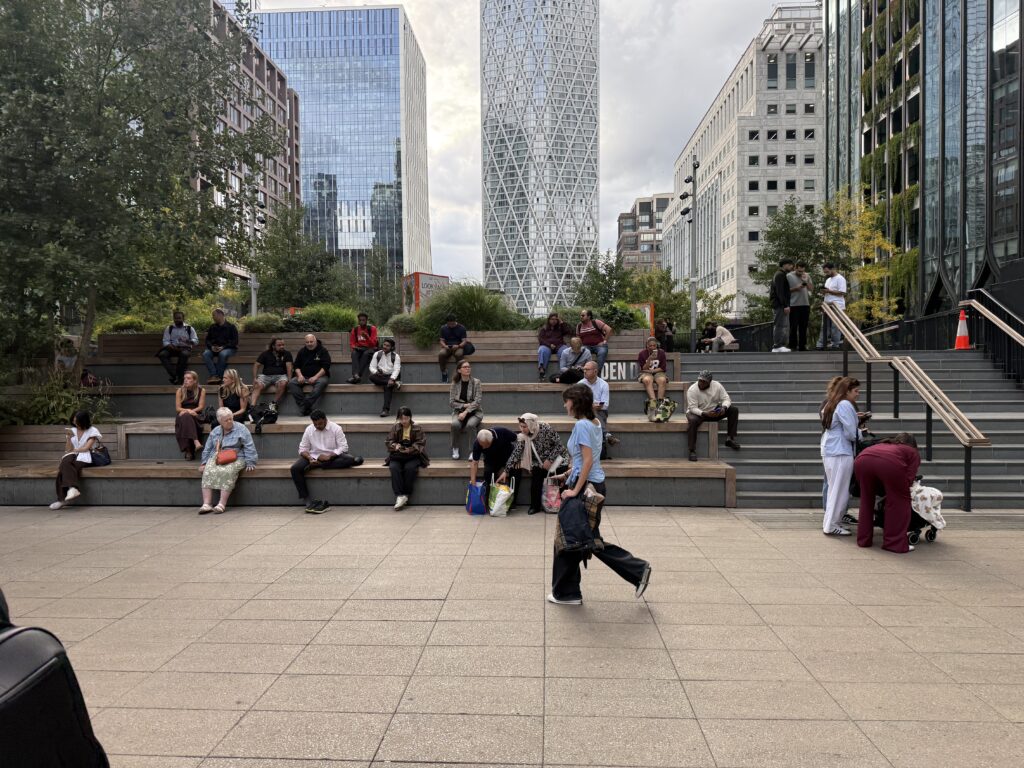
The group’s accounts show both sides of that tension. At the end of 2024 occupancy across its retail malls was 97.4 per cent and retail and hospitality rental income had risen to £71.1m from £68.5m. Yet six tenants entered liquidation and another six went into administration during the year; five of those units had been relet or were with solicitors by year end.
Full malls, in other words, are not the same as businesses that last.
In August 2026 the group said 99 per cent of its retail and leisure space was occupied and Sea Lanes had attracted more than 30,000 swimmers in its first month. Those numbers establish appetite for the attraction. What they cannot yet show is whether a swimmer becomes a customer for businesses around the dock, or whether demand holds through winter in a natural, unheated pool.
Nor is the office economy disappearing. PwC agreed heads of terms in July for 350,000 sq ft at One Eden. Alongside Visa’s move and JPMorganChase’s proposed tower, it suggests leisure and housing are not replacing the office so much as being used to make Canary Wharf more competitive as an office location too.
The harder task is whether a purpose-built financial district can feel varied, affordable and lived-in enough that residents and visitors keep spending there when the office lights go out – and that the independents serving them survive the competition the strategy invites.
Ashby still leaves for something the Wharf cannot manufacture. Asked what he goes elsewhere in London to find, his answer is immediate: “Greenery, really. Literally just trees.”
And what would make him spend more of his weekend, and his money, in Canary Wharf?
“Clubbing.”
