




From April 1, Britain’s vaping firms start registration with HM Revenue & Customs ahead of a new levy set to take effect on October 1, 2026. The Vaping Products Duty will impose a flat-rate tax on e-liquids and enforce stricter supply-chain controls, including official duty stamps on all products. As prices are expected to rise, younger users seek cheaper options, while the long-term smokers go for niche options.
For Fatima (20) introduction to vaping started as a simple moment of curiosity in the classroom.
“I smelled it first”, she says. “It felt really nice. Then my friend said, ‘It’s like a sweet.’”
She tried it, didn’t like it, and then tried again. “It wasn’t really the nicotine that got to me. It was the flavor. It just tasted really good.”
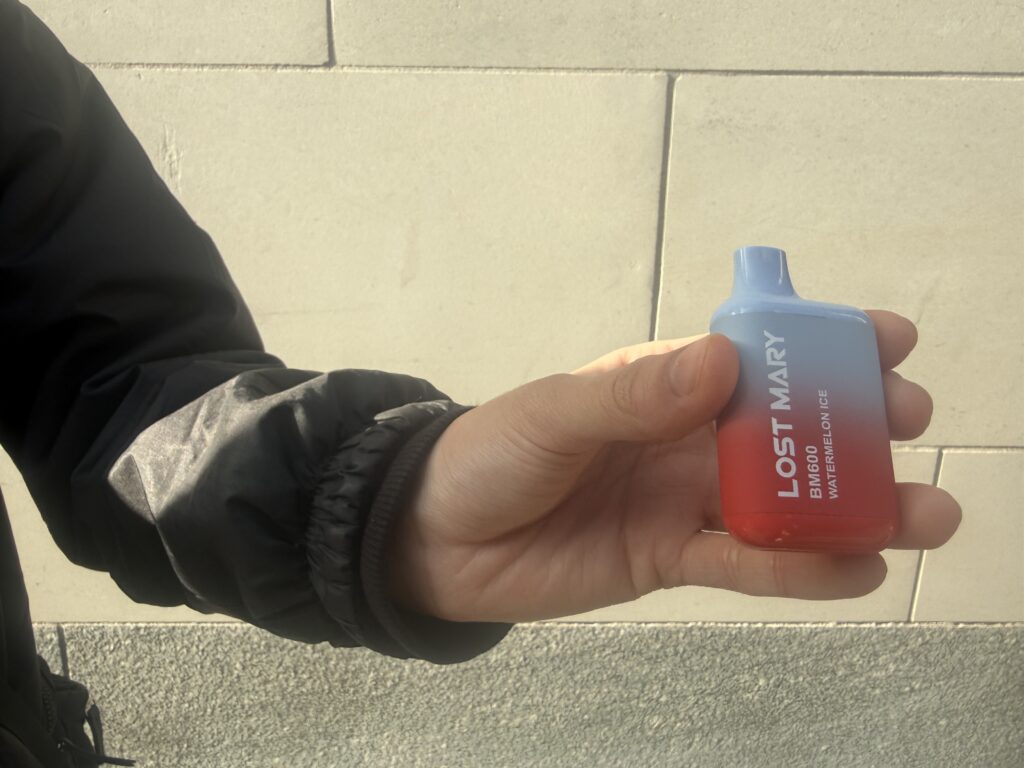
She uses bright colored, small vape with prefilled pods which are replaceable once finished. Flavors match the colorful packaging, often exotic in taste – mango, blueberry, strawberry, you name it.
Prices vary too, as she explains the prices start from 3-5 pounds. They mainly depend on where you buy them.
“There are always corner shops, small shops that still sell disposable ones for a few ponds or two for 5 ponds, often they don’t ask for the ID or anything.”
She mentions these are cheapest alternative her peers often use when it comes to vapes.
“When this finishes, I probably won’t do it again. It’s just to remember what the flavor tasted like”, says Fatima.
Becky’s story sits at the other end of the vaping spectrum.
At 38, she turned to vaping with a clear purpose: to quit smoking. “I used to smoke about 20 cigarettes a day,” she says. “I went to vaping to stop.”
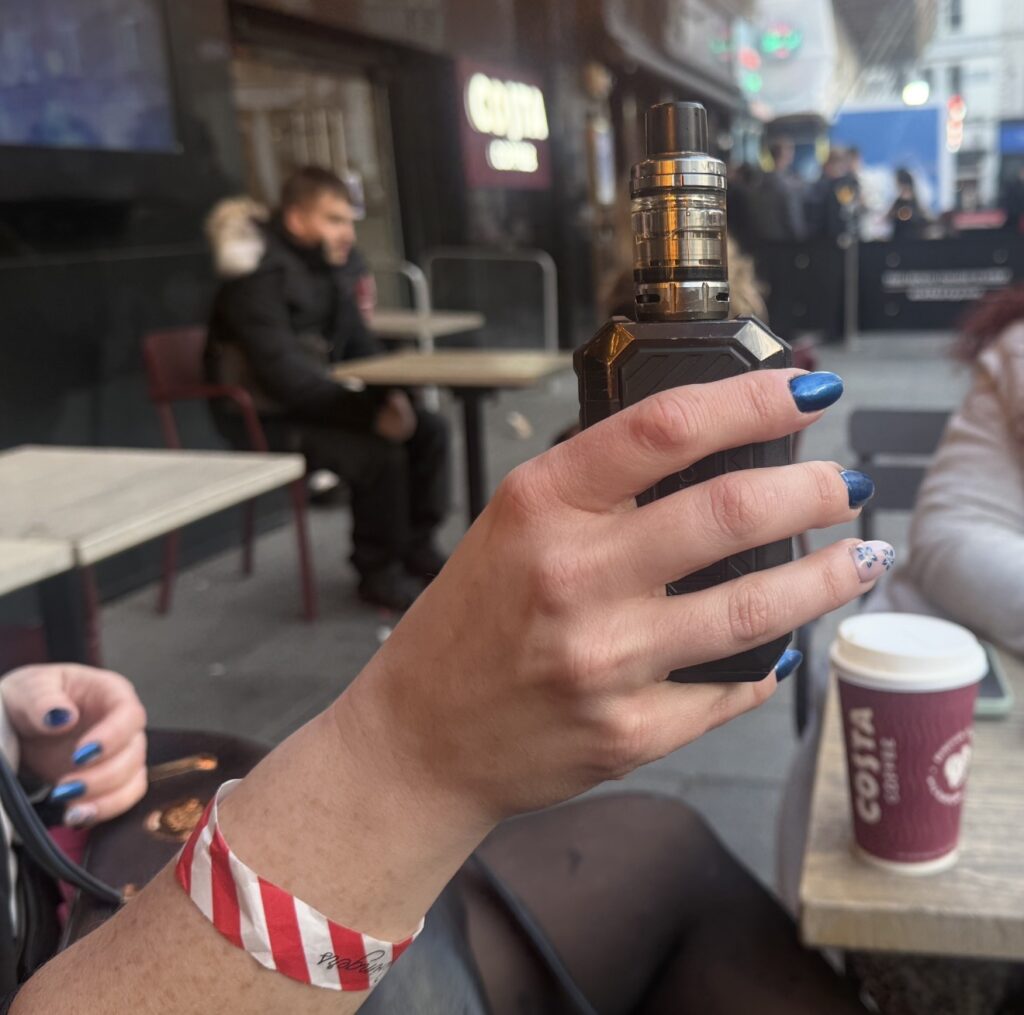
Unlike casual users, Becky has developed a routine around vaping. She uses a refillable device and mixes her own e-liquid, controlling nicotine intake carefully.
“I make my own juice, you can actually buy the different ingredients, so I know what’s going into it”. She says that does that to keep the nicotine levels at 4 milligrams – “much lower than what you’d typically buy.”
It’s also, she notes, cost-effective, mentioning that any new price increases won’t bother her at all.
“I probably pay about 80 pounds every three years for my device and then for my juice, £30 will last me four months. So it’s really cheap”
Fatima and Becky are among estimated 5.1 million vapers in the UK facing increased price of vaping products, according to the HM Revenues and Customs (HMRC) Policy Paper.
By reducing the affordability of the vapes, policy makers are aiming to reduce the number of people taking up vaping, mainly non-smokers and young people.
Vaping Products Duty (VPD) will be charged a flat rate of £2.20 per 10 millilitres of vaping liquid, regardless of how much nicotine is contained in the product starting from October 1 2026.

First step in enforcing this measure starts in a few days. From April 1manufacturers, wholesalers, importers are obliged to register with the HMRC in order to continue operating lawfully in the UK.
Independent British Vape Trade Association (IBVTA) explains in the written statement that the specialist retailers first brought these products to smokers over 15 years ago, “with a highly personalized and supportive customer experience that helps adults who smoke to transition from smoking to vaping”.
The market transformed trough the yeas into the multibillion ponds operation.
Vape market value is estimated at 106 million pounds monthly, According to Market trends published in February 2026 by Totally Wicked Group, one of the leading UK distributors.
Same research says the market is down from the £135m levels seen through much of 2025 as the market adjusts ahead of regulatory change and the disposable exit with 13% decrease at a value level from the January 2025.
Among the dedicated specialist retailers, the demand is dominated by refillable kits and 10ml liquid refills, IBVTA explained in the written statement, while the products with replaceable refills and pods are the most popular elsewhere, mainly among the convenience and grocers.
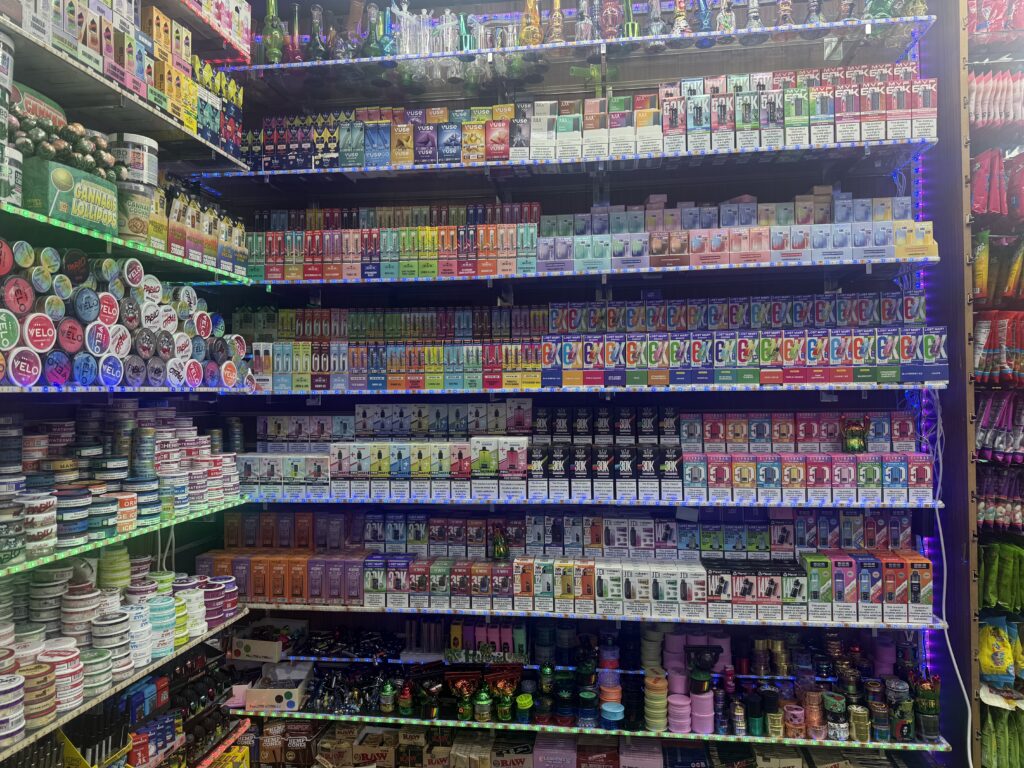
As the official vape market goes through the regulatory changes, beyond the scope of regulation lies a sizeable illicit trade, where millions of products circulate each year.
Another of the governments objectives is “reducing youth access to illicit vaping products”.
As Fatima, introduced earlier, observes, cheap single-use vapes continue to be sold on the streets of London despite the ban introduced earlier.
More than 2.2 million single-use vapes continue to be bought in the UK every week, according to the latest Material Focus’s research despite the single-use vape sales ban that came into force in the UK on the 1st June 2025.
As they explain many vapers might be mistakenly thinking that what they are buying are single-use, and are therefore throwing them away when in fact they are rechargeable or an illegal single-use vapes might be still on sale.
IBVTA is aware of the problem acknowledging “a significant vape trade through the opportunist wholesale suppliers, via the many inexperienced “pop up” retailers”.
“Retailers that do not take the care to make sure the products they sell are compliant, also may not care who they sell those products to. Sales to anyone under 18, and proxy sales have been illegal for more than a decade now.”
But the trade association sees it as an organized crime issue, rather than a vape-specific one.
“Criminal networks just see vapes as ready cash market commodity, in the same way they might see illicit tobacco, or other counterfeit and illicit products”.
In 2024–25, National Trading Standards seized more than one million illegal vapes inland and a further 1.2 million at ports in England. The seizures point to a market that continues to shift, with links to organized crime and established illicit supply chains, even as regulation of the legal sector tightens