




WeWork was expected to fail in the flexible offices. Rather, the co-working market in London is redefined by corporate demand, increasing prices and the reality of working hybrid.
A different kind of office
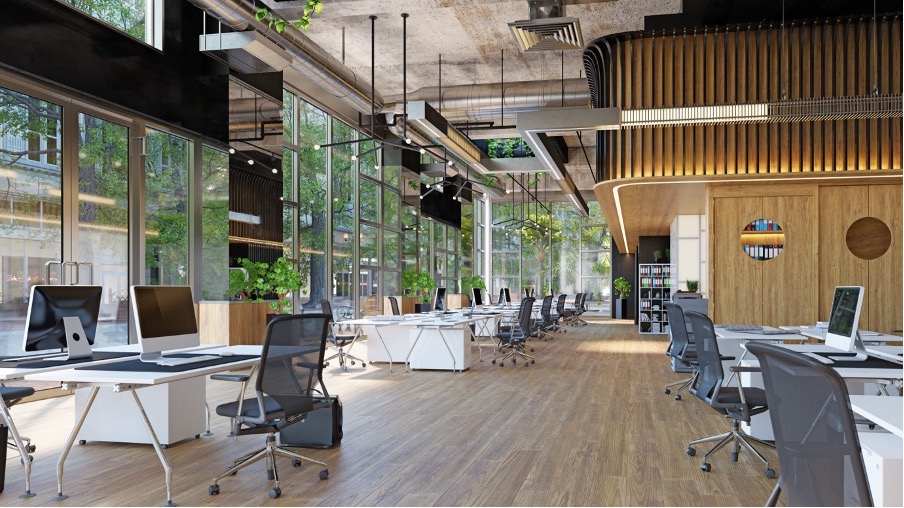
Image from Adobe Stock ©
The rhythm of work is no less familiar, but slightly changed, on a weekday morning in Clerkenwell. Individuals move between glass meeting rooms and shared desks, with their laptops open, with headphones on. Some are freelancers. Many are not. They are workers who work between the days of the office, start-up companies that do not have their headquarters permanently, and businesses that are figuring out the extent of their space in an economy that is hybrid.
The atmosphere is more like a club of the members as opposed to a conventional office. That is no accident. The workspace at Old Sessions House, design, hospitality and flexibility are combined so that they reflect a broader change in the co-working market in London. “People are no longer seeking the place to work only, but the place where they feel thoughtful and social,” this is what former Knotel general manager Myra Grigsby stated. The demand has changed towards something experience based as opposed to functional space.
After the fall
Such emphasis on experience is now being used in another way. WeWork has since fallen into an attempt to make office space relevant once more since its demise. WeWork, which had a valuation of $47 billion, expanded on long-term lease on cheap capital and use of short-term membership as a source of revenue. That mismatch could not be sustained when the cost of borrowing increased and occupancy declined. The risks at the heart of the model became apparent when it became bankrupt in 2023.
However, the industry did not vanish. It adjusted. In 2024, the UK had recorded a take-up of flexible office space of 1.06 million square feet compared to approximate 950,000 square feet of flexible office space in 2023 and to 2019 levels when it had surpassed 1.1 million square feet. London occupancy rates have been robust at about 88 per cent.
A shift in demand

Image from Adobe Stock ©
The cause of such demand has shifted. “The most significant change that has occurred”, according to Jonathan Bevan, “is the one between individuals to companies, where flexible space is considered as an element of office strategy. Flexibility is no longer a privilege; it is a necessity.”
Co-working no longer comes as an office alternative. It is integrating with the organization of the office itself. These companies which used to depend on long-term headquarters are integrating small core offices with flexible space that can expand or contract. The teams visit on alternate days. Headcount fluctuates. Real estate which was treated as a fixed cost is now being taken care of as a variable cost.
The property market backdrop
Such reconfiguration is occurring in a shifting property market. The fact that hybrid work does not require the full-time attendance has lowered the requirement to have property, and the increase in interest rates has increased the cost of keeping property. According to the early 2025 office vacancy in Central London, the office vacancy was approximately 7.1 per cent, which is higher than it was before the pandemic. Meanwhile, the space demand of high-quality has been more stable, and the prime rent has increased by 9.1 per cent in the city and 18.8 per cent in the West End.
Overall companies are reducing the amount of space they occupy but they are expecting more out of what they retain. Andrew Burrell said that “the office demand has changed structurally due to hybrid working. The market is experiencing an increase in the selectiveness by the occupiers, and the market is creating a distinct role of flexible workspace.”
Flexible workspace falls in between that shift and provides shorter commitments in a market characterized by uncertainty. It is not only cost implications. In case the office is not a default setting anymore, it cannot exist without explanation.
Redefining the office
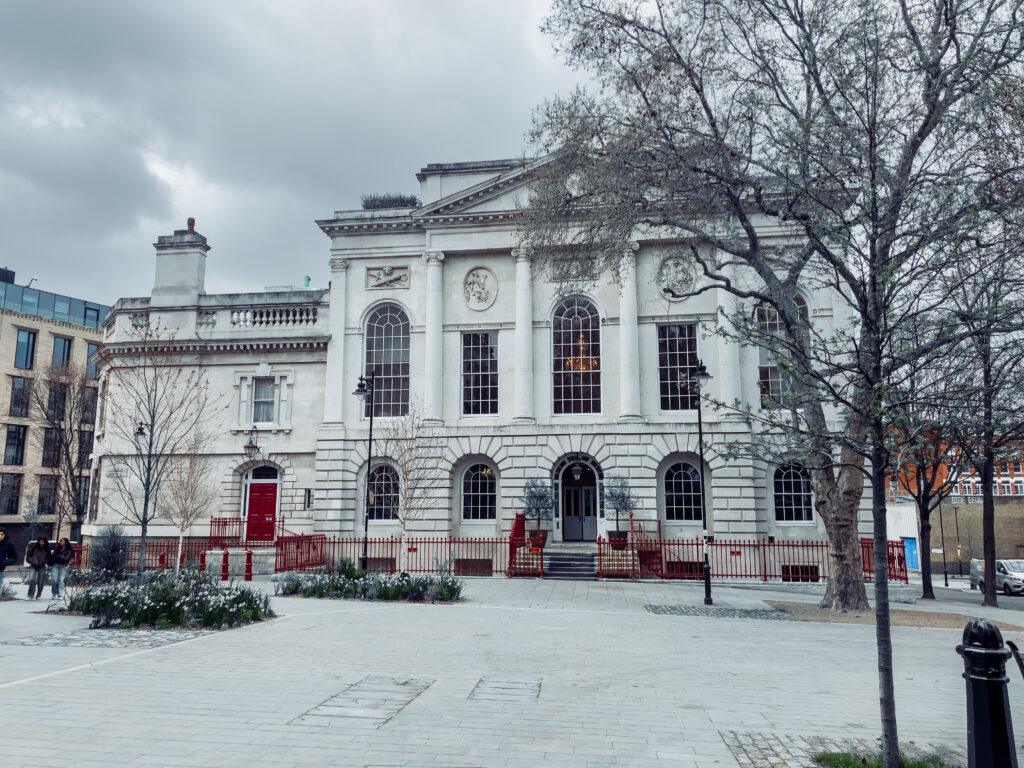
Old Sessions House, London OscarPatrick ©
The change is revealed in places such as Old Sessions House. It is no longer about desks, but about environment. The value proposition now includes design, atmosphere and shared experience, especially as employers make attempts to lure staff back into physical locations.
The changing role of the office is turning out to mean more than half of occupiers in London focus more on space to be used in collaboration instead of the sitting-at-desk. To employees, co-working provides distance between home and not as stiff as a traditional office. To businesses, it offers flexibility to the business without the fixed cost exposure.
A more disciplined model
The co-working industry that has been created following WeWork is smaller and more serious. Approximately 10 per cent of the London office market is now made up of flexible workspace, with operators looking at occupancy, pricing and sustainability, as opposed to expansion.
But there is the simmering beneath. Burrell said that “there are issues in the industry, especially with the interaction of flexible models and long-term property expenses.”
The issue of flexible workspace remains based on the need to balance short-term users and long-term commitments. That restriction has not been eliminated. It has been handled with more care.
The cost of flexibility
The downfall of WeWork was the final chapter of a business, which was premised on low capital and aggressive growth. What has ensued is a softer rebalancing, which has been influenced by the stricter conditions of financing, the choosier demand and a more disciplined risk treatment.
Whether co-working can substitute the office or not is now no longer the question. Whether it can be a sustainable layer in a structurally uncertain market is whether it can be sustained. If it will be able to strike a balance between flexibility and the non-negotiable facts of property, co-working will not shape the future of work. It will establish part of its cost.